The Demon Slayer franchise exploded from anime sensation to multimedia powerhouse, and Nintendo Switch owners have been lucky enough to get in on the action. If you’re wondering what’s available, how it runs, or whether it’s worth picking up in 2026, you’re in the right place. This guide covers every Demon Slayer game on Switch, performance deep-dives, content breakdowns, and whether these titles still hold up against the competition. Whether you’re a die-hard Tanjiro fan or just looking for a solid arena fighter, here’s what you need to know.
Table of Contents
ToggleKey Takeaways
- Demon Slayer: The Hinokami Chronicles on Nintendo Switch is the flagship title available, featuring a story mode covering the anime through the Mugen Train arc and a complete roster of 26 characters with three seasons of DLC as of 2026.
- The Switch version runs at 1080p docked and 720p handheld with 60 FPS gameplay, though performance dips occur during tag battles and loading times are longer than other platforms—handheld mode masks graphical compromises and suits the quick 2-3 minute match structure.
- Story Mode offers an 8-10 hour narrative experience faithful to the anime with voice acting and cel-shaded visuals, while Versus Mode provides competitive arena fighting with accessible combo mechanics and online ranked play through rollback netcode.
- The Deluxe Edition at $79.99 USD (frequently discounted 25-50% on eShop and physical retailers) offers the best value, including all three season passes versus buying separately, with no further DLC announced past Season 3.
- Online multiplayer suffers from a smaller Switch player base with 2-5 minute queue times during peak hours and no cross-play support, though community Discord servers provide reliable competitive alternatives and casual lobbies remain active.
- New players should start with Tanjiro or Zenitsu, master stamina management and Guard Counters, and use combo trials to build matchup knowledge, with cosmetic unlocks earned through ranked play and mission S-ranks.
What Demon Slayer Games Are Available on Nintendo Switch?
Demon Slayer: Kimetsu no Yaiba – The Hinokami Chronicles
Demon Slayer: Kimetsu no Yaiba – The Hinokami Chronicles is the flagship title on Switch. Developed by CyberConnect2 (the team behind Naruto Ultimate Ninja Storm), it launched on Switch in June 2022, roughly eight months after the PS4/PS5/Xbox/PC release in October 2021. This is a 3D arena fighter that blends story-driven campaign content with competitive versus modes.
The game covers the anime’s story from the start through the Mugen Train arc. You’ll relive iconic moments like Tanjiro’s family tragedy, Nezuko’s transformation, and the battles against the Twelve Kizuki. The roster includes fan favorites like Tanjiro Kamado, Nezuko Kamado, Zenitsu Agatsuma, Inosuke Hashibira, and various Hashira like Giyu Tomioka and Kyojuro Rengoku.
Post-launch DLC expanded the character roster significantly. As of 2026, the complete edition includes characters from the Entertainment District arc and beyond, with updates continuing sporadically through 2024 and early 2025. The Switch version receives simultaneous DLC drops with other platforms, which wasn’t always the case for arena fighters in the past.
Demon Slayer: Sweep the Board.
Demon Slayer: Sweep the Board. is a party board game released exclusively in Japan in December 2021, with no official Western localization as of March 2026. Think Mario Party meets Demon Slayer. Players roll dice, navigate boards themed around anime locations, and compete in minigames.
The game supports up to four players locally and features a roster of playable characters from the series. Minigames range from rhythm challenges to reflex tests, all wrapped in Demon Slayer aesthetic. It’s accessible for younger audiences and casual fans but lacks the depth fighting game enthusiasts expect.
For Western players, importing is the only option. The gameplay is simple enough that language barriers don’t destroy the experience, but menu navigation and story elements remain in Japanese. It’s a niche pick unless you’re a completionist or hosting family game nights with Demon Slayer superfans.
How Does The Hinokami Chronicles Play on Switch?
Graphics and Performance Comparison
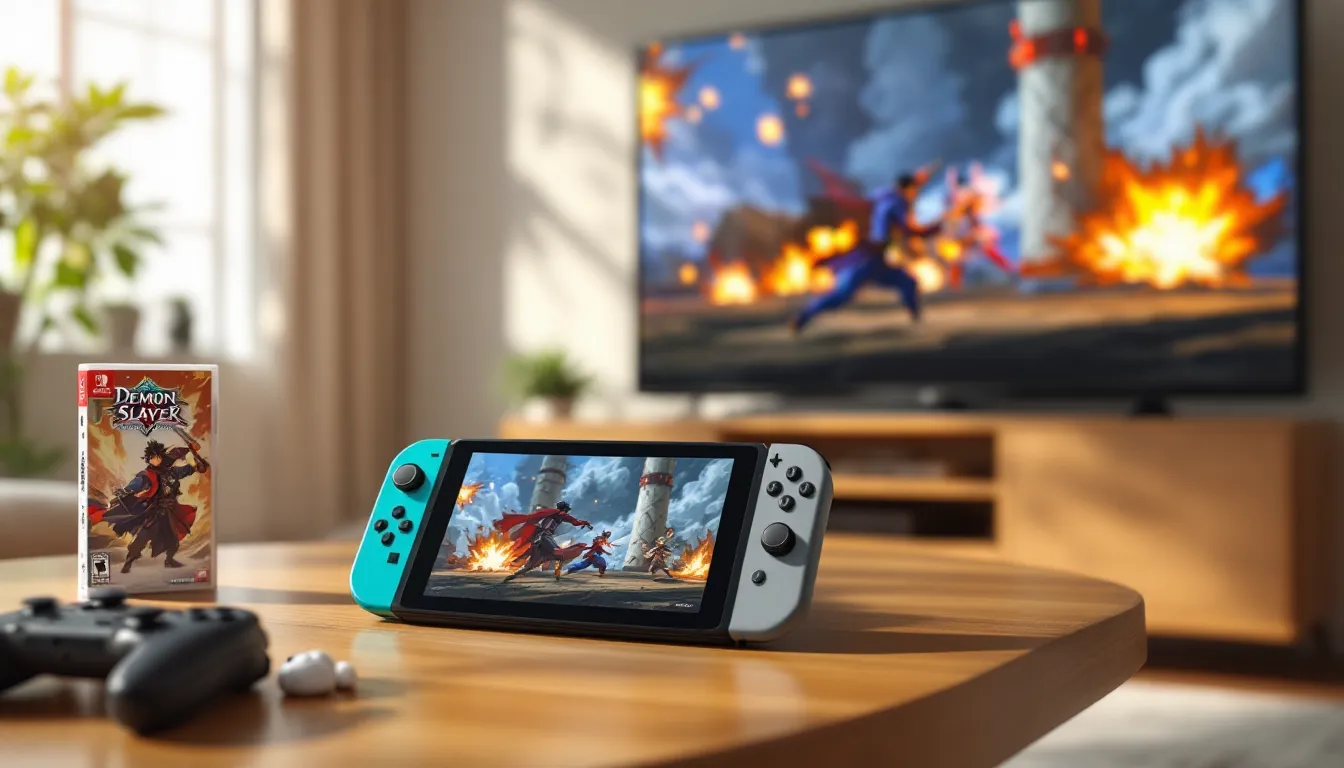
The Switch port of The Hinokami Chronicles runs at 1080p docked and 720p handheld, targeting 60 FPS during gameplay. CyberConnect2’s signature anime-shaded visuals translate well to Switch hardware, maintaining the vibrant colors and dynamic camera work that define the studio’s style.
That said, concessions were made. Environmental detail takes a hit compared to PS5 and Xbox Series X versions, background textures are noticeably lower resolution, and particle effects during ultimate attacks are pared back. Loading times are longer, averaging 15-20 seconds between matches versus 5-8 seconds on PS5 with an SSD.
Frame rate holds steady at 60 FPS during one-on-one battles, but dips occur during tag-team matches or when multiple ultimate moves fire off simultaneously. Expect drops to the low 50s in those scenarios. It’s not game-breaking, but competitive players will notice.
Compared to other arena fighters on Switch like Guilty Gear Strive, The Hinokami Chronicles prioritizes spectacle over rock-solid performance. If you’re used to locked 60 FPS fighters, the occasional stutter might grate on you.
Handheld vs. Docked Mode Experience
Handheld mode is where the Switch version shines. The smaller screen masks graphical downgrades, and the portability factor can’t be overstated for a game with quick match structures. A typical versus match runs 2-3 minutes, making it perfect for commutes or handheld grinding sessions.
Controls feel responsive on Joy-Cons, though serious players will want a Pro Controller or third-party fight pad. Executing combos with the Joy-Con’s smaller analog stick and buttons is doable but cramped during extended play. The d-pad on the Pro Controller makes directional inputs cleaner, especially for guard counters and dodges.
Docked mode offers the full visual spectacle, ultimate animations look gorgeous on a big screen, but the performance compromises become more apparent. If you’re splitting time between docked competitive sessions and handheld story grinding, you’ll adapt quickly. Just don’t expect the buttery smoothness of the PS5 version.
Game Modes and Content Breakdown
Story Mode: Reliving the Anime
Story Mode adapts the anime from Episode 1 through the Mugen Train movie. It’s presented as a series of missions interspersed with animated cutscenes and playable combat encounters. You’ll control different characters depending on the arc, Tanjiro for most chapters, with occasional switches to Zenitsu, Inosuke, or Hashira during key battles.
Missions blend exploration segments (light on interactivity, mostly running from point A to B) with scripted fights. The game nails the anime’s tone, using cel-shaded visuals and voice acting ripped straight from the show. If you’ve already watched the anime, Story Mode won’t surprise you, but it’s a solid recap with added interactivity.
Completion takes roughly 8-10 hours, depending on difficulty and whether you chase S-ranks on missions. Unlockables like character profile art and memory fragments encourage replays, but there’s no branching paths or alternate endings. It’s fan service first, gameplay innovation second.
Critically, the mode ends before the Entertainment District arc. DLC characters from that arc (like Tengen Uzui and Daki) appear in Versus Mode but have no story missions. That’s a missed opportunity, especially for players who bought the game post-DLC hoping for a complete narrative.
Versus Mode: Competitive Fighting
Versus Mode is the meat of the package. This is a traditional 3D arena fighter: two characters face off in destructible arenas, building meter for special moves and tag assists. Matches are fast-paced, emphasizing aggressive offense over defensive turtling.
Mechanics include:
- Boost Dash: Close gaps quickly or escape pressure. Costs stamina.
- Guard: Block incoming attacks but be wary of guard breaks.
- Combo System: Light/Heavy attacks chain into launcher combos. Most characters have 5-7 hit bread-and-butter combos.
- Ultimate Arts: Cinematic super moves that deal massive damage. Requires full meter.
- Assist Characters: Tag in support fighters for combo extensions or defensive bailouts.
The skill ceiling isn’t as high as traditional fighters like Guilty Gear or Tekken, but there’s depth for players willing to lab combos and learn matchups. Movement is floaty compared to grounded fighters, which some players love and others find imprecise.
Online ranked mode uses a tiered system (Bronze through Demon Slayer rank). Matchmaking can be slow depending on region and time of day, more on that in the multiplayer section.
Playable Characters and Roster
The base roster launched with 18 characters. Post-DLC, the total sits at 26 playable fighters as of early 2026. Here’s the breakdown:
Base Roster:
- Tanjiro Kamado, Nezuko Kamado (playable and demon forms), Zenitsu Agatsuma, Inosuke Hashibira
- Giyu Tomioka, Shinobu Kocho, Kyojuro Rengoku, Tengen Uzui, Muichiro Tokito, Mitsuri Kanroji
- Sabito, Makomo
- Rui, Akaza, Enmu, Yahaba, Susamaru, Hand Demon
DLC Additions (Seasons 1-3):
- Tengen Uzui (Entertainment District version), Daki, Gyutaro
- Obanai Iguro, Sanemi Shinazugawa, Gyomei Himejima
- Yoriichi Tsugikuni, Kokushibo
Each character has unique movesets, though some overlap exists (multiple sword users share similar combo structures). The most popular picks in competitive play are Akaza, Rengoku, and Giyu due to their mix of speed, range, and high-damage confirms.
Notably absent: characters from arcs beyond Entertainment District, even though the manga concluding in 2020. Fans have been vocal about wanting final arc fighters, but CyberConnect2 hasn’t announced further DLC past the 2025 Season 3 pass.
Is Demon Slayer on Switch Worth Buying in 2026?
Pros and Cons for Switch Players
Pros:
- Portability: Handheld play is smooth and fits the game’s quick match structure perfectly.
- Complete DLC Package: Buying now gets you access to all three season passes at discounted bundle pricing.
- Faithful Adaptation: Story Mode captures the anime’s best moments with high production values.
- Accessible Combat: Easy to pick up for casual fans: combo trials ease newcomers into mechanics.
- Local Multiplayer: Couch versus mode supports two players with minimal performance drops.
Cons:
- Performance Compromises: Frame drops during tag battles and longer load times than other platforms.
- Limited Story Content: Narrative ends at Mugen Train: DLC characters lack story missions.
- Small Online Player Base: Matchmaking can be slow, especially outside peak hours in North America and Europe.
- No Cross-Play: Switch players can only match with other Switch users, fragmenting the community.
- Basic Roster Compared to Manga: Missing fan-favorite characters from later arcs.
If you’re primarily a Switch player and a Demon Slayer fan, The Hinokami Chronicles is still worth grabbing in 2026. It’s the definitive portable Demon Slayer experience. Just temper expectations around online longevity and graphical fidelity.
Price and Value Analysis
As of March 2026, The Hinokami Chronicles on Switch retails for $59.99 USD for the standard edition. The Deluxe Edition, which includes all three season passes, runs $79.99 USD.
Frequent eShop sales drop the standard edition to $29.99 and the Deluxe to $49.99, especially during seasonal promotions (expect discounts around major anime conventions or Nintendo’s summer/winter sales). If you’re patient, waiting for a sale is the move.
Physical copies are available through major retailers and sometimes dip below digital pricing. As of early 2026, retailers like GameStop and Best Buy have cleared out stock at $24.99-$34.99 for new copies, though availability varies by region.
For value, the Deluxe Edition is the best bang for your buck if you plan to engage with the full roster. Buying season passes individually totals $35, so the $20 upcharge in the Deluxe Edition saves $15 and includes bonus cosmetics.
Compared to other anime fighters, The Hinokami Chronicles sits mid-tier in content volume. Games like Dragon Ball FighterZ or the Naruto Storm series offer more single-player content, but Demon Slayer’s polish and presentation justify the price for fans of the IP.
Tips and Tricks for New Players
Mastering Combat Mechanics
New players should start with Tanjiro or Zenitsu, both have straightforward combo routes and forgiving hitboxes. Tanjiro’s Water Breathing: Tenth Form is a reliable punish tool, while Zenitsu’s Thunder Breathing: First Form is a fast overhead that catches defensive players.
Combo Fundamentals:
- Start with light attacks (Square/Y) to build meter safely.
- Chain into heavy attacks (Triangle/X) for launcher setups.
- Follow launchers with air combos, most characters can juggle 3-4 hits midair.
- Finish with a special move (R2 + button) or save meter for Ultimate Arts.
Stamina management is critical. Boost Dashing aggressively burns stamina, leaving you vulnerable if you whiff. Use it to close distance after knockdowns or punish whiffed ultimates, not as a neutral approach tool.
Guard Counters (press Guard + Heavy during blockstun) are your escape hatch against pressure. They cost half a bar of meter but create breathing room and can turn momentum. Don’t mash them, good players will bait and punish.
Practice mode includes combo trials for every character. Completing these unlocks profile rewards and teaches optimal routes. Even if you don’t main a character, running their trials builds matchup knowledge.
Unlocking All Characters and Rewards
Most characters unlock through Story Mode progression. Completing chapters unlocks the featured fighters for Versus Mode. Akaza and Rui unlock after finishing their respective boss fights. DLC characters are immediately available after purchase, no in-game unlocks required.
Memory Fragments are Story Mode collectibles hidden in exploration segments. They unlock character bios and concept art in the gallery. There are 50 total, Siliconera published a complete location guide in 2022 that’s still accurate.
Cosmetic Unlocks (profile icons, titles, and character color palettes) come from ranked matches, mission S-ranks, and in-game currency (Kimetsu Points). Grinding ranked is the fastest route, each match awards 50-200 KP depending on performance and rank.
Kimetsu Points can be spent in the Rewards Shop. Prioritize character colors if you care about customization, or save for profile backgrounds if you’re a completionist. Nothing in the shop affects gameplay, it’s all cosmetic.
Online Multiplayer: What to Expect
Matchmaking and Player Base
Switch’s online player base for The Hinokami Chronicles is the smallest across all platforms. As of March 2026, ranked matchmaking during North American evenings (7-11 PM EST) averages 2-5 minute queue times. Off-peak hours or lower-population regions (Australia, South America) can stretch to 10+ minutes.
The lack of cross-play hurts. PS4/PS5 players make up the bulk of the active community, and Switch users are siloed into a much smaller pool. Ranked populations spike after DLC drops or when the game goes on sale, but activity tapers off within weeks.
Casual lobbies fare better. You can create or join rooms for unranked matches, and the community tends to congregate there. Lobbies support up to eight players (four matches running simultaneously), though in practice you’ll see 2-4 person rooms more often.
If you’re serious about competitive play, consider joining community Discord servers. The Demon Slayer Fighting Game Community Discord organizes Switch-specific events and sparring sessions, which is more reliable than solo queuing ranked.
Online Performance on Switch
Online stability depends heavily on connection quality. The game uses rollback netcode, which is standard for modern fighters and handles latency better than older delay-based systems. Matches with 3-bar connections (yellow indicator) are playable but expect occasional stutters. 4-5 bar connections (green) feel close to offline.
Wi-Fi play is discouraged, as always with fighting games. Switch’s Wi-Fi chip is notoriously inconsistent, and arena fighters are more susceptible to packet loss than you’d think. Use a wired adapter if you plan to spend time online. The performance difference between Wi-Fi and wired on Switch is night-and-day.
Input delay is slightly higher online versus offline, roughly 4-5 frames of additional latency on good connections. Execution-heavy combos that rely on 1-2 frame links become less consistent. Adjust by using more lenient confirms or focusing on neutral and reads rather than optimal punishes.
Ragequitting is rare but not unheard of. The game penalizes disconnects with temporary ranked bans (30 minutes for first offense, escalating with repeat offenses), which keeps it in check. Most players will finish the match even if they’re losing.
DLC and Updates: What’s New in 2026
CyberConnect2 released the final major DLC for The Hinokami Chronicles in December 2025 with Season Pass 3. This added Yoriichi Tsugikuni and Kokushibo, two of the most requested characters from the fanbase. Both fighters are top-tier in competitive play, Yoriichi’s Sun Breathing moveset has insane range, while Kokushibo’s Moon Breathing combos dish out brutal damage.
Patch 1.51, released in February 2026, addressed lingering balance issues. Akaza received a damage nerf on his combo enders (previously dealing 45% health in optimal routes, now capped at 38%). Rengoku’s Flame Breathing ultimate startup frames increased by 3, making it easier to interrupt. Quality-of-life improvements included faster menu navigation and reduced loading times on Switch (down from 20 seconds to 12-15 seconds on average).
No further character DLC has been announced. CyberConnect2 shifted focus to other projects, and Demon Slayer’s anime has moved beyond the arcs covered in-game. The studio hasn’t ruled out a sequel, but as of March 2026, The Hinokami Chronicles is functionally complete.
Minor cosmetic DLC still trickles out, profile icon packs and alternate costumes based on promotional anime art. These are priced at $1.99-$3.99 and are purely optional. The last major content drop was a free update in January 2026 adding Training Mode 2.0, which includes frame data displays and hitbox visualization. Competitive players have been begging for this since launch, and it finally arrived.
For players jumping in now, buying the Deluxe Edition gets you everything in one package. There’s no FOMO around missing limited-time content, all DLC remains permanently available on the eShop.
Where to Buy Demon Slayer Games for Nintendo Switch
Digital:
The easiest route is the Nintendo eShop. Search for “Demon Slayer” and you’ll find both the standard and Deluxe Editions of The Hinokami Chronicles. Digital purchases are tied to your Nintendo Account and can be redownloaded anytime.
Keep an eye on eShop sale tracking sites like Deku Deals, which alert you when the game drops in price. Historical data shows The Hinokami Chronicles goes on sale roughly every 6-8 weeks, with discounts ranging from 25% to 50% off.
Physical:
Major retailers (GameStop, Best Buy, Target, Walmart) carry physical copies, though stock has become inconsistent in 2026 as the game ages. Online marketplaces like Amazon and eBay are reliable backups. Physical copies include a download code for some early DLC bonuses (character colors and profile icons), but nothing gameplay-critical.
If you’re outside North America or Europe, importers like Play-Asia stock the Japanese version of Sweep the Board.. Be aware that the game is Japan-exclusive with no English language option. Prices hover around $50-$60 USD plus international shipping.
Bundles and Special Editions:
As of 2026, no special edition bundles are actively sold new. Limited editions released at launch included an artbook and steelbook case, but these are now out of print and command collector premiums on secondary markets ($80-$120 depending on condition).
Some regions received bundle deals pairing The Hinokami Chronicles with anime Blu-rays or manga volumes. Check local retailers in Japan or Europe for leftover stock. These bundles offer better value for superfans but aren’t necessary for the gameplay experience.
For budget-conscious buyers, used physical copies from GameStop or local game stores often run $15-$25, and the DLC can be purchased separately if you decide you want the expanded roster later. Reports from Nintendo Life in late 2025 noted that physical copies were being clearanced to make shelf space for newer releases, so hunting for deals can pay off.
Conclusion
Demon Slayer: The Hinokami Chronicles on Switch is a competent port of a solid anime fighter. It won’t replace Smash Bros. or Guilty Gear in your rotation if you’re a hardcore fighting game player, but it delivers exactly what Demon Slayer fans want: flashy, faithful combat wrapped in the anime’s signature style. The portability factor gives it an edge over other platforms for casual play, though competitive players will feel the performance and population limitations.
In 2026, the game sits in a comfortable spot. DLC is complete, balance patches have smoothed out the roughest edges, and sale prices make entry affordable. Whether you’re replaying the anime’s story in interactive form or just want to pit Tanjiro against Akaza in quick matches, the Switch version gets the job done. Just go in knowing what you’re getting: a fan-service fighter first, a competitive esport second.