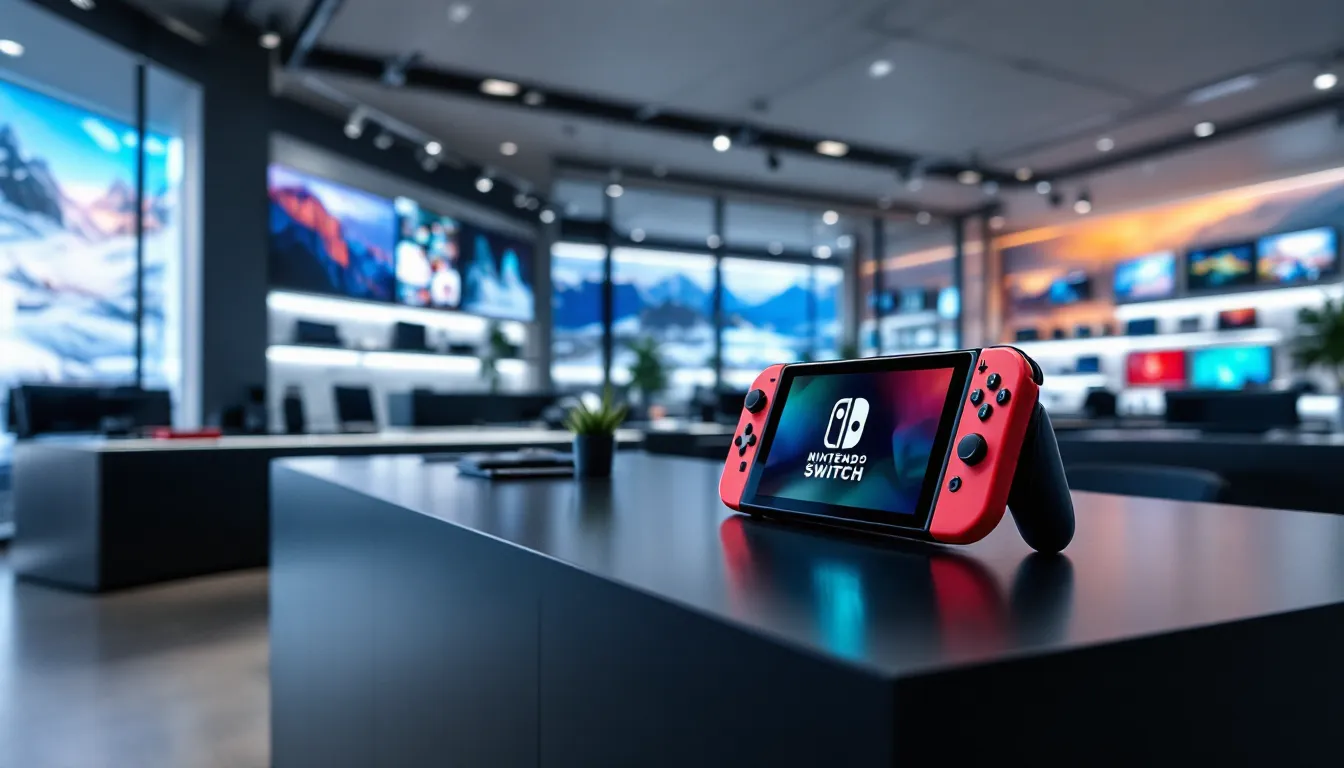
Nintendo dropped a bomb on the gaming community earlier this year: the Switch is now more expensive. For a console that’s been a mainstay since 2017, the price hike caught many off guard, especially those eyeing their first Switch or considering an upgrade. Whether you’re a parent shopping for your kid’s birthday or a dedicated Pokémon trainer looking to complete your collection, that extra cash matters.
This isn’t just about a few extra bucks at checkout. The increase ripples through everything from used console values to how Nintendo positions itself against the PlayStation 5 and Xbox Series X. With rumors swirling about a successor console, the timing raises questions about Nintendo’s strategy moving forward. Here’s everything gamers need to know about the Switch price increase, what triggered it, and how to make smart purchasing decisions in 2026.
Table of Contents
ToggleKey Takeaways
- The Nintendo Switch price increase to $329.99 stems from global economic pressures including inflation, currency fluctuations, and supply chain challenges that raised manufacturing costs by 18-22% since 2023.
- While the price hike is economically justified, the Nintendo Switch’s value proposition remains strong for buyers prioritizing exclusive titles like Zelda and Pokémon over raw hardware performance.
- Smart shoppers can still save on a Nintendo Switch purchase by targeting Black Friday deals, refurbished options from Nintendo’s official store, or waiting for post-holiday clearance sales.
- Used Nintendo Switch values increased following the price announcement, making this an opportune time to sell or trade in older units before a potential Switch 2 launch.
- The Nintendo Switch price increase signals Nintendo’s strategy to extend the current console’s lifecycle while testing consumer price tolerance ahead of a premium Switch 2 successor expected in late 2026.
Why Did Nintendo Increase the Switch Price?
Nintendo didn’t wake up one morning and decide to squeeze more money out of customers for fun. The price increase stems from a perfect storm of economic and logistical challenges that have hammered tech manufacturers across the board.
Global Economic Factors Driving the Change
Inflation hasn’t just hit groceries and gas, it’s crushed the gaming industry too. Between 2023 and 2026, manufacturing costs for electronics surged by approximately 18-22% globally. Currency fluctuations, particularly the weakening yen against the dollar and euro, forced Nintendo’s hand. When your production costs jump but your selling price stays flat, profit margins evaporate fast.
Central banks worldwide maintained higher interest rates through 2025, cooling consumer spending but also increasing operational costs for companies like Nintendo. Add in rising energy costs across Asian manufacturing hubs, and you’ve got a recipe for price adjustments. Sony and Microsoft faced similar pressures, the PS5 saw regional price increases in 2024, and Xbox adjusted pricing on accessories multiple times.
Manufacturing and Supply Chain Challenges
The semiconductor shortage that plagued the industry from 2020-2023 never fully resolved. While chip availability improved, manufacturing capacity remained tight, driving component prices up. NVIDIA Tegra processors, the heart of the Switch’s custom chipset, faced production bottlenecks as NVIDIA prioritized high-margin AI and datacenter products.
Logistics costs haven’t returned to pre-pandemic levels either. Shipping containers from Asian ports to North America and Europe cost 40-60% more than they did in 2019. Nintendo manufactures the Switch primarily in China and Vietnam, regions that experienced labor cost increases averaging 12-15% since 2023.
Raw materials tell the same story. Lithium for batteries, rare earth elements for screens, and plastics derived from petroleum, all saw sustained price elevation through 2024-2025. When every component costs more and shipping eats your margins, price increases become inevitable rather than optional.
How Much Did the Nintendo Switch Price Increase?
Let’s cut to the numbers. The increase varies depending on which Switch model you’re eyeing and where you’re shopping, but here’s the breakdown.
Standard Switch Model Price Changes
The standard Nintendo Switch jumped from its long-standing $299.99 MSRP to $329.99 in North America as of January 2026. That’s a $30 increase, or roughly 10%. European markets saw the Switch rise from €329.99 to €359.99, while UK pricing shifted from £279.99 to £309.99.
This marks the first official price increase for the base Switch model since its 2017 launch. Nintendo held the line at $299.99 for nearly nine years, impressive considering inflation alone would’ve justified increases years earlier. That pricing discipline built massive market share, but economics finally forced the change.
Switch OLED and Switch Lite Pricing Updates
The Switch OLED model, which launched at $349.99 in 2021, now retails at $379.99, a $30 bump matching the standard model. In Europe, expect to pay €389.99 versus the original €359.99. The OLED’s premium positioning remains intact, maintaining that $50 gap above the base Switch.
The Switch Lite went from $199.99 to $219.99 in North America. European pricing shifted to €229.99 from €219.99. The Lite maintains its budget-friendly appeal, but that $20 increase stings for parents buying multiple units for kids or households looking for a dedicated handheld.
Regional Price Variations Across Markets
Japan saw modest increases, the standard Switch moved from ¥32,978 to ¥35,980, reflecting Nintendo’s home market sensitivity. Australia jumped from AUD $469.95 to $509.95 for the standard model, one of the steeper percentage increases globally.
Latin American markets experienced the harshest adjustments. Brazil’s Switch OLED, already expensive due to import taxes, crossed the R$3,000 mark. Mexico saw pricing jump from MXN $8,999 to MXN $9,999 for the base model. These regions always paid premium prices due to tariffs and distribution costs, but the increases compound existing accessibility issues.
Canada’s pricing moved to CAD $419.99 from $379.99 for the standard model. Currency exchange rates and separate distribution networks mean Canadian gamers rarely get pricing that simply converts from USD, they typically pay a premium.
What Does This Mean for New Switch Buyers?
If you haven’t pulled the trigger on a Switch yet, the price increase complicates the value calculation. But it doesn’t necessarily kill the deal.
Is the Switch Still Worth Buying at the New Price?
Here’s the honest take: the Switch’s value proposition always centered on its exclusive library and hybrid flexibility, not raw hardware specs. At $329.99, you’re still getting access to The Legend of Zelda: Tears of the Kingdom, Super Smash Bros. Ultimate, Animal Crossing: New Horizons, Pokémon Scarlet and Violet, Splatoon 3, and Mario Kart 8 Deluxe, titles you literally cannot play anywhere else.
The hybrid design remains unique in 2026. PlayStation Portal offers remote play, and Steam Deck delivers PC gaming portability, but neither matches the Switch’s seamless dock-to-handheld transition. For households with multiple gamers or anyone who travels frequently, that flexibility justifies the price.
That said, the hardware shows its age. The Switch launched with mobile-class internals in 2017, and nine years later, performance gaps are glaring. Frame rate dips in demanding titles, 720p handheld resolution, and load times that make you question your life choices, these issues become harder to overlook at $330.
For families or casual gamers prioritizing Nintendo’s first-party lineup, the answer is yes. For performance-focused players expecting 60fps and visual fidelity, the value gets murky.
Comparing Value Against Competing Consoles
PlayStation 5 Digital Edition sits at $449.99, $120 more than the base Switch, but delivering substantially more horsepower. The PS5 runs games at 4K/60fps, supports ray tracing, and loads games via SSD in seconds. If raw performance matters and portability doesn’t, Sony’s ecosystem offers better bang for buck.
Xbox Series S retails at $299.99, actually cheaper than the Switch now. It lacks a disc drive and tops out at 1440p, but punches well above the Switch in performance and includes access to Game Pass, arguably gaming’s best subscription value. For budget-conscious players who primarily game at home, the Series S presents serious competition.
The Steam Deck starts at $399 for the base model, with OLED versions at $549. It’s pricier upfront but opens access to your entire Steam library. For PC gamers or those invested in Steam’s ecosystem, the Deck offers better hardware and flexibility. But, it lacks Nintendo’s polish and first-party exclusives.
Nintendo’s strength isn’t competing on specs, it never has been. The Switch succeeds because Mario, Zelda, and Pokémon don’t exist on PlayStation or Xbox. If those franchises matter to you, there’s no alternative. If they don’t, other consoles deliver better technical performance per dollar.
Impact on Existing Nintendo Switch Owners
Already own a Switch? The price increase affects you less directly, but ripple effects still matter.
Will Accessories and Games See Price Increases?
First-party Nintendo games have held steady at $59.99 for full releases. Nintendo hasn’t announced plans to push that to $69.99, the new standard Sony and Microsoft adopted in 2020, but don’t bet against it happening eventually. Third-party publishers already price major releases at $69.99 on Switch when parity exists across platforms.
Pro Controllers remain at $69.99, though third-party alternatives crept up 10-15% across the board. Joy-Con pairs still retail at $79.99, which feels increasingly absurd considering their drift issues. Charging docks, carrying cases, and SD cards haven’t seen direct Nintendo-driven increases, but general inflation nudged prices up 5-10% depending on brand and retailer.
Nintendo Switch Online subscription pricing stayed flat, $19.99 annually for the base tier, $49.99 for the Nintendo Switch Online Expansion Pack. That’s one area where Nintendo resisted the urge to extract more revenue, likely to avoid subscriber backlash. Maintaining online service pricing helps offset the sting of console increases.
Trade-In Values and Resale Market Effects
Interestingly, used Switch values bumped up following the price increase announcement. Standard Switch consoles that traded for $180-200 on platforms like eBay and Facebook Marketplace jumped to $210-230 in decent condition. The price increase indirectly boosted resale values by widening the gap between new and used pricing.
Retailers adjusted trade-in values accordingly. GameStop increased Switch trade-in credit by roughly 10-15%, though their offers remain notoriously low. Private sales through marketplace platforms yield better returns, expect $200-240 for a standard Switch with accessories and games, $280-320 for an OLED model.
Switch Lite resale values improved too, jumping from $120-140 to $140-160. Not massive gains, but enough to matter if you’re planning to sell or trade up. The budget handheld market stays competitive with mobile gaming, so Lite values won’t skyrocket, but they’re holding better than expected.
If you’re considering upgrading to a Switch OLED or eventually to Nintendo’s next console, selling your current Switch just got slightly more profitable. Time the sale right, post-holiday seasons see prices dip as supply floods the market from gift upgrades.
How to Save Money on a Nintendo Switch Purchase
The price increase doesn’t mean you’re stuck paying full MSRP. Smart shoppers can still score deals.
Best Times to Buy for Deals and Discounts
Black Friday remains the undisputed champion for Switch discounts. Major retailers typically bundle the Switch with a game or accessories at $50-70 off, sometimes maintaining pre-increase effective pricing. Target, Best Buy, and Walmart compete aggressively with doorbusters and online exclusives.
Prime Day (typically July) offers strong deals for Amazon shoppers. Expect bundle discounts or gift card incentives that effectively reduce prices by $30-50. Nintendo rarely does straight price cuts, but retailers eat margins to drive traffic.
Post-holiday January and February see clearance pricing on remaining holiday stock. Retailers need to move inventory, creating opportunities for 10-15% discounts or enhanced bundles. It’s not as dramatic as Black Friday, but supply is less chaotic.
Avoid purchasing in September through October, the pre-holiday window where retailers have zero incentive to discount. Full MSRP dominates, and limited editions command premiums.
Refurbished and Pre-Owned Switch Options
Nintendo’s official refurbished store offers excellent value. Refurbished standard Switch consoles go for $259.99, $70 below new MSRP. They include a one-year warranty and pass through Nintendo’s quality checks. Stock fluctuates, but checking weekly pays off. These units often come from minor cosmetic damage returns or overstock, not heavy use.
GameStop’s pre-owned Switch inventory typically runs $30-50 below MSRP with a 30-day warranty. Quality varies wildly, inspect carefully for Joy-Con drift, screen scratches, and dock condition. Their online stock updates frequently, and in-store availability gives you inspection opportunities.
Facebook Marketplace and Craigslist offer the lowest prices, $200-250 for standard models, but carry risk. Meet in public, test thoroughly, and verify the console isn’t stolen by checking the serial number against Nintendo’s database. Avoid deals that seem too good: stolen consoles get banned from online services.
eBay provides buyer protection that private sales lack. Expect to pay $220-260 for used standard Switch consoles from reputable sellers. Check seller ratings, return policies, and detailed photos. Avoid international sellers to simplify returns if issues arise.
Bundle Deals and Retailer Promotions
Retailers create bundles to differentiate from competitors. Common packages include:
- Switch + game + carrying case bundles typically add $40-50 in value while maintaining console MSRP, effectively discounting accessories.
- Switch + Nintendo Switch Online subscription bundles save $15-20 versus separate purchases.
- Themed special editions tied to games like Zelda or Pokémon maintain MSRP but include unique designs that hold resale value better.
Credit card rewards programs can effectively reduce costs. Discover and Chase often run 5% cash back on Amazon or electronics categories quarterly. Best Buy’s credit card offers 5% back on purchases, stacking with sale pricing.
Warehouse clubs, Costco, Sam’s Club, occasionally offer Switch bundles with games and accessories below retail cost. Membership fees apply, but if you’re already a member, check gaming sections regularly. These bundles pop up around holidays and disappear fast.
Student discounts exist at some retailers. Best Buy’s Student Deals program occasionally includes Switch bundles with 5-10% reductions or enhanced store credit. Verify eligibility through platforms like UNiDAYS or Student Beans.
Community and Industry Reactions to the Price Hike
The gaming community didn’t exactly throw Nintendo a parade when the price increase dropped.
Reddit’s r/NintendoSwitch erupted with predictable frustration. Top threads questioned why a nine-year-old console design warranted higher pricing when competitors offer superior hardware at similar price points. Fair criticism, the Switch’s mobile chipset from 2017 feels ancient compared to Steam Deck or even midrange smartphones.
Twitter reactions split along predictable lines. Nintendo loyalists defended the increase as inevitable given economic conditions, pointing to Sony’s PS5 price adjustments in 2024. Critics hammered Nintendo for not coupling the increase with hardware upgrades, no performance boost, no storage increase, just higher prices for identical hardware.
Industry analysts at The Verge noted that Nintendo’s pricing power stems from its exclusive IP. Mario and Zelda create inelastic demand, fans will pay premium prices because alternatives don’t exist. That gives Nintendo leverage competitors lack when adjusting pricing.
Content creators on YouTube and Twitch covered the increase extensively. Popular gaming channels like Spawn Wave and Nintendo Life analyzed the business rationale while acknowledging consumer frustration. The consensus: economically justifiable but poor timing given Switch’s hardware age and persistent successor rumors.
Nintendo Life polling showed 58% of respondents considered the increase reasonable given inflation, while 42% felt Nintendo should’ve absorbed costs to maintain goodwill. That near-even split reflects the complexity, reasonable business decision, but frustrating consumer experience.
Japanese gaming communities on platforms like 5ch reacted with more acceptance. Nintendo’s home market historically shows greater brand loyalty and understanding of yen volatility’s impact on pricing. Criticism existed but lacked the intensity seen in Western markets.
Industry trade publications like VGC reported that Nintendo’s Q1 2026 sales data showed minimal impact on units moved, the installed base growth slowed slightly but remained positive. Translation: consumers grumbled but kept buying, validating Nintendo’s pricing decision from a business perspective.
Retailers privately welcomed the increase. Higher MSRPs create room for promotional discounting that drives foot traffic without sacrificing margins. The price hike paradoxically enables “better deals” during sales events, psychology matters as much as actual savings.
What This Means for Nintendo’s Future Strategy
The price increase isn’t just about 2026 economics, it telegraphs Nintendo’s thinking about the next generation.
Nintendo extended the Switch lifecycle beyond typical console generations. PlayStation and Xbox operate on 6-7 year cycles: the Switch hit nine years while remaining commercially viable. Increasing prices this late signals Nintendo plans to keep the Switch in market longer, potentially into 2027 or beyond, rather than rushing a successor.
The move also tests consumer price tolerance before setting Switch 2 expectations. If gamers accept $329 for aging hardware, they’ll likely swallow $399-449 for a new console with modern specs. Nintendo’s reading the room, gathering data on price elasticity that informs future launch pricing.
From a strategic standpoint, the increase creates clear price segmentation. Switch at $329, Switch OLED at $379, leaves runway for a premium Switch 2 at $449-499 without cannibalizing the existing install base. Multi-tier product lines maximize market coverage, budget buyers get Switch Lite, mainstream buyers choose standard or OLED, enthusiasts jump to Switch 2 at launch.
Potential Impact on Switch 2 Pricing and Release
Rumors about Switch 2, officially unannounced but widely leaked, suggest a Q4 2026 or Q1 2027 launch window. Specs remain speculative, but industry chatter points to NVIDIA’s Tegra239 chip, 8GB RAM, DLSS support, and backward compatibility with existing Switch games.
If those specs prove accurate, expect $449-499 pricing. That positions Switch 2 between PlayStation 5 Digital ($449) and disc editions ($499), while offering Nintendo’s unique hybrid functionality. The current Switch price increase creates breathing room for this premium tier without making the original Switch look absurdly overpriced by comparison.
Nintendo learned from the Wii U disaster, don’t abandon your install base prematurely. Maintaining Switch availability at $329 alongside a $449 Switch 2 lets Nintendo court new buyers and upgraders simultaneously. Cross-generation game support extends software sales across both platforms, maximizing developer and publisher participation.
The installed base matters enormously. With over 145 million Switches sold through 2025, that ecosystem represents continued software and online service revenue. Keeping the original Switch in market with attractive pricing, even post-increase, preserves that revenue stream while building Switch 2 momentum.
Consumers increasingly expect backward compatibility after PlayStation and Xbox normalized it. Switch 2 playing existing Switch cartridges and digital libraries means early adopters don’t sacrifice their game collections, lowering the psychological barrier to upgrade. That compatibility becomes a selling point justifying premium pricing.
One wildcard: will Nintendo maintain three SKUs (Lite, standard, OLED) for original Switch while launching Switch 2? Or consolidate to two Switch models plus the new platform? Pricing strategy suggests Nintendo keeps Switch Lite as the budget entry point ($219), phases out standard Switch eventually, maintains OLED as the mid-tier ($379), and launches Switch 2 as premium ($449+). That four-SKU approach maximizes market segmentation if supply chains cooperate.
Conclusion
The Nintendo Switch price increase stings, no question. Paying more for hardware that launched in 2017 feels wrong on a gut level, especially when better specs exist elsewhere at similar price points. But context matters, inflation, component costs, and currency volatility created economic pressures Nintendo couldn’t indefinitely absorb.
For prospective buyers, the calculus depends on priorities. If Nintendo’s exclusive library and hybrid functionality align with your gaming style, the Switch remains worth buying even though the increase. If you prioritize performance and visual fidelity, PlayStation 5 or Xbox Series X deliver better hardware value. Budget-conscious players should target seasonal sales, refurbished options, or used markets to soften the impact.
Existing owners face minimal direct impact, though accessory and game pricing bears watching. The used market improved slightly, creating better opportunities for those planning to upgrade or sell.
Looking forward, the price increase positions Nintendo strategically for Switch 2’s eventual launch. By establishing higher baseline pricing now, Nintendo sets expectations and creates room for a premium successor without alienating budget buyers. Whether that strategy succeeds depends on Switch 2’s specs, pricing, and game lineup, questions we’ll likely answer before year’s end.
For now, shop smart, wait for deals, and remember: the value isn’t just in the hardware. It’s in the hundreds of hours you’ll spend in Hyrule, on Splatsville turf wars, or building your perfect island paradise. That experience doesn’t depreciate, even if your wallet feels lighter at checkout.