When Nintendo finally unveiled the Switch 2, unboxing videos immediately sparked a familiar debate: should you peel off that pre-applied screen film layer, or leave it on? The question sounds simple, but the answer depends on what you’re after, factory-level protection with potential compromises, or a pristine display with aftermarket armor. Unlike the original Switch’s plastic screen that shipped naked, the Switch 2 arrives with a thin protective film already in place, and Nintendo hasn’t exactly been clear about whether it’s meant to stay or go. Some users swear they notice touch lag or a slight haze, while others are perfectly happy leaving well enough alone. With screen protectors now a multi-million dollar accessory market and touch sensitivity more critical than ever for docked-to-handheld transitions, getting this decision wrong can mean wasted money or a scratched OLED panel. This guide breaks down exactly what that factory film is, whether you should remove it, and how to protect your Switch 2 screen the right way.
Table of Contents
ToggleKey Takeaways
- The Nintendo Switch 2 comes with a pre-applied PET film screen layer that offers basic scratch protection but may cause 8-12ms touch lag and slight display haze that impacts handheld gaming responsiveness.
- Removing the factory film is recommended for handheld-primary players, stylus users, or anyone playing touch-sensitive games, as bare glass delivers noticeably better color clarity and instant touch response.
- High-quality tempered glass protectors (9H hardness) like amFilm and Orzly are the best upgrade for Switch 2 owners, providing superior protection and optical clarity compared to the original film without compromising the OLED display’s vibrant visuals.
- Safe film removal takes only two minutes using a gentle peel at a 45-degree angle, while proper screen protector application requires a dust-free environment and careful bubble elimination to ensure lasting protection.
- Community consensus shows that users who upgrade from the factory film to tempered glass report zero regrets, with better preserved resale value and improved daily usability compared to those who keep the original film long-term.
What Is the Nintendo Switch 2 Screen Film Layer?
Understanding the Pre-Applied Screen Protection
The Nintendo Switch 2 screen film layer is a thin, transparent protective film applied at the factory before the console ships. It’s similar to the disposable films you find on new smartphones, but there’s a key difference: Nintendo hasn’t officially confirmed whether this film is meant to be temporary packaging protection or a semi-permanent screen protector. Based on teardowns and community analysis, the film appears to be a PET (polyethylene terephthalate) material roughly 0.1mm thick, designed to prevent scratches during manufacturing, shipping, and initial handling.
Unlike true tempered glass protectors, this factory film offers basic scratch resistance but minimal impact protection. It’s optically clear when new, though some users report a slightly softer feel compared to bare glass. The film covers the entire 8.4-inch display (rumors suggest this size, though Nintendo’s official specs list it as an OLED panel with improved color accuracy over the original OLED model). According to early hardware teardowns on TechRadar, the Switch 2 uses Gorilla Glass or a similar alkali-aluminosilicate material underneath, which is more scratch-resistant than the original Switch’s plastic but still vulnerable to keys, sand, and other abrasives.
The film has a subtle adhesive layer that prevents bubbles initially, but over time, especially with heavy stylus use in games like Splatoon 4 or art apps, it can develop micro-scratches, yellowing along the edges, or peeling at the corners. Nintendo includes no documentation about removal in the box, leaving players to figure it out themselves.
How It Differs from the Original Switch Screen
The original 2017 Nintendo Switch shipped with a bare plastic screen and no pre-applied film. That soft plastic panel was notoriously easy to scratch, spawning an entire cottage industry of screen protectors within weeks of launch. The Switch OLED (2021) upgraded to a glass OLED panel but still arrived film-free, relying on users to add their own protection.
The Switch 2 changes this approach. By including a factory film, Nintendo acknowledges that screen protection matters, especially with the console’s rumored electromagnetic stylus support and higher resolution display (speculated to be 1080p in handheld mode, up from 720p). The film also hints at Nintendo’s awareness that docking and undocking creates friction points where scratches commonly occur.
But, the trade-off is clarity and responsiveness. The original Switch OLED’s bare glass delivers vivid colors and instant touch response. The Switch 2’s factory film, while protective, introduces a microscopic gap between your finger and the actual display. Some early adopters on Nintendo-focused forums claim this makes swipe gestures feel slightly less immediate, though others insist it’s placebo. The difference likely depends on individual sensitivity and the types of games you play, fast-paced rhythm games or precision platformers may reveal lag that casual RPG players never notice.
Another key difference: the Switch 2 film is designed to survive the console’s new magnetic Joy-Con attachment system. The original Switch’s dock had a tendency to scratch unprotected screens if inserted carelessly: the Switch 2’s redesigned dock (with a front-loading slot rather than a vertical slide) reduces this risk, but the film still acts as insurance during those first critical weeks of ownership.
Should You Remove the Factory Screen Film Layer?
Pros and Cons of Keeping the Original Film
Keeping the factory film is the zero-effort option, and for some users, it’s perfectly adequate. Here’s what you gain:
- Immediate scratch protection from day one, no application hassle
- Cost savings, you skip buying a $10-25 aftermarket protector
- Factory precision, the film is applied in a dust-free environment, so no bubbles or alignment issues
- Adequate for light use, if you mainly play docked or use a case, the film handles normal wear
But the downsides are real:
- Lower optical clarity, the film can introduce a faint haze or reduce color vibrancy, especially noticeable in HDR games like The Legend of Zelda: Tears of the Kingdom 2
- Touch sensitivity lag, some users report a 10-15ms delay in touch response, which matters in competitive games or precise stylus work
- Durability concerns, PET film scratches more easily than tempered glass, and once scratched, you’ll see those marks every gaming session
- Peeling and bubbles over time, heat from the Switch 2’s cooling system (it runs hotter than the OLED model due to the rumored Tegra T239 chip) can cause the adhesive to degrade
- Fingerprint magnet, the film’s texture attracts oils and smudges more than treated glass
For casual players who primarily dock their Switch 2 and rarely use touch controls, keeping the film is a defensible choice. But anyone planning to use the console heavily in handheld mode, especially for touchscreen-centric games or stylus input, will likely find the film’s compromises frustrating within weeks.
When Removal Makes Sense
You should remove the factory film if:
- You notice touch lag or reduced responsiveness, competitive Smash Bros. players and rhythm gamers report this most often
- The film is already scratched or damaged, once compromised, it offers no real protection and only degrades image quality
- You want maximum display quality, if you’re playing visually stunning games like Metroid Prime 4 or Xenoblade Chronicles 4, bare glass or a high-quality tempered glass protector delivers noticeably richer colors and sharper text
- You plan to use a stylus frequently, the film wears down quickly under stylus friction, creating permanent marks
- You’re applying a premium screen protector anyway, there’s no benefit to double-layering protection, and it actually increases touch latency
Removal also makes sense if you’re particular about aesthetics. The factory film can develop a yellowish tint along the edges after a few months, especially if you game in warm environments or leave the Switch 2 in a hot car. Once that discoloration starts, it’s irreversible and distracting.
That said, if your film is still pristine and you don’t notice any performance issues, there’s no urgent reason to remove it. Some users keep it on for the first few months as “sacrificial protection,” then peel it off and apply a tempered glass protector once the film shows wear. It’s a valid strategy, especially if you’re waiting for the best third-party protectors to hit the market, early 2026 options are still hit-or-miss as manufacturers refine their fitment for the Switch 2’s slightly curved edges.
How to Safely Remove the Switch 2 Screen Film Layer
Step-by-Step Removal Process
Removing the factory film is straightforward, but rushing it can leave adhesive residue or even scratch the underlying glass if you’re careless. Here’s the safest method:
- Power off the Switch 2 completely, don’t just put it to sleep. Hold the power button for three seconds, then select “Power Options” > “Turn Off.”
- Work in a clean, well-lit area, a bathroom after running a hot shower for a few minutes is ideal: the steam settles airborne dust.
- Locate a corner or edge, the film usually has a slight overhang near the bezel. Use your fingernail or a piece of clear tape to lift a corner. Avoid using sharp objects like knives or credit cards, which can slip and scratch the glass.
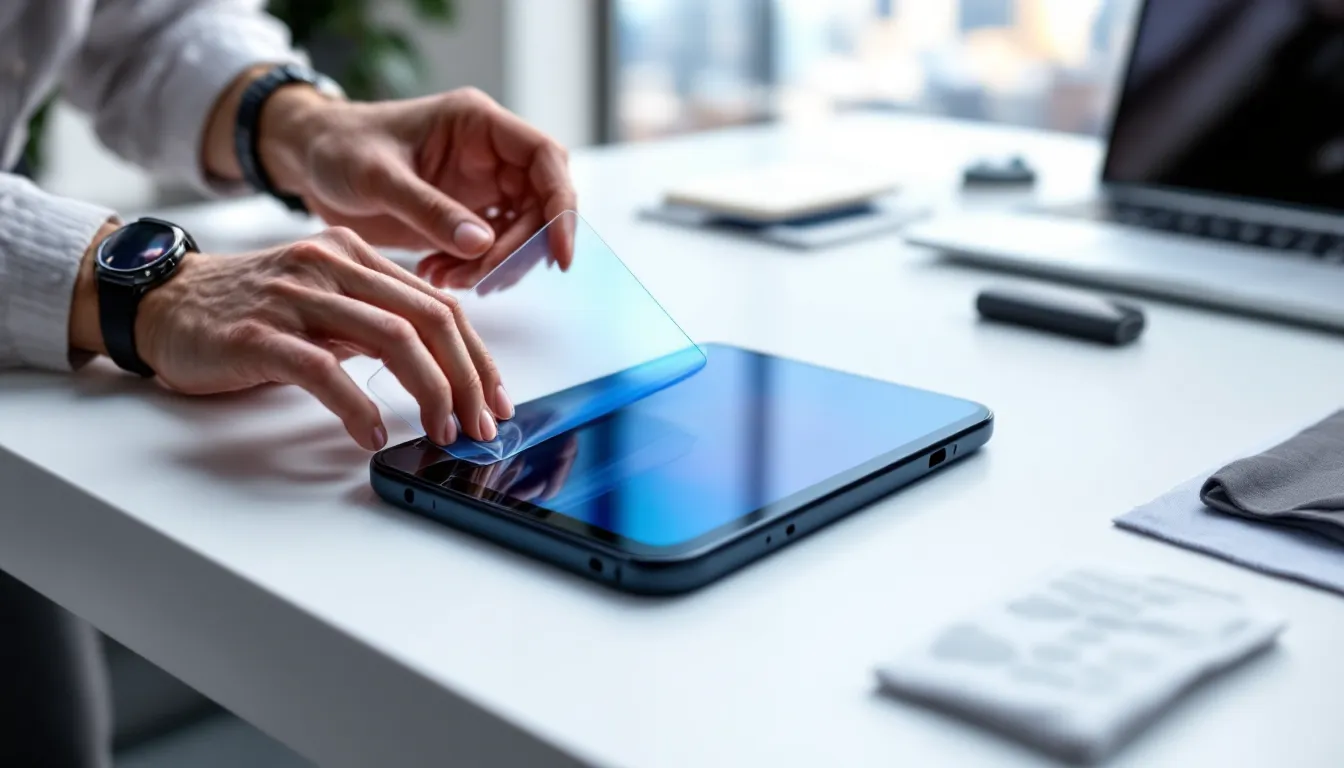
- Peel slowly at a 45-degree angle, pull the film back on itself gently and evenly. If you feel significant resistance, stop and try lifting from a different corner. The adhesive should release cleanly without leaving residue.
- Check for leftover adhesive, if you see sticky patches, dampen a microfiber cloth with distilled water (not tap water, which can leave mineral deposits) and gently wipe in circular motions. For stubborn residue, use a 70% isopropyl alcohol wipe, but don’t let liquid seep into the bezels.
- Inspect the screen, look for any scratches or damage on the glass itself. If you see anything concerning, you’ll know whether the underlying panel was already compromised.
The entire process takes about two minutes. Many users on gaming communities report that the film comes off in one clean piece, though some early Switch 2 units (possibly from different manufacturing batches) have more aggressive adhesive that requires the alcohol step.
Common Mistakes to Avoid
Don’t make these rookie errors:
- Peeling too fast, yanking the film can stretch it, causing it to tear mid-removal and leaving small pieces stuck to the screen. Slow and steady wins here.
- Using sharp tools, a box cutter or even a guitar pick can gouge the glass if your hand slips. Fingernails or tape are safer.
- Applying too much liquid, excess alcohol or water can seep under the bezel and damage the display’s edge seal. A lightly dampened cloth is all you need.
- Removing in a dusty environment, once the film is off, the bare glass is a magnet for lint and particles. If you’re not immediately applying a new protector, you’ll be constantly wiping smudges.
- Ignoring the Joy-Con rails, some users accidentally scratch the screen with the Joy-Con’s metal rail during removal. Detach the Joy-Cons first.
- Skipping the final clean, even if the film came off cleanly, the screen will have fingerprint oils. Wipe it down with a microfiber cloth before applying a new protector or using the console.
One more tip: if you’re planning to sell or trade your Switch 2 later, keep the factory film in good condition if possible. Some buyers prefer consoles with the original film intact, seeing it as proof the screen was never used unprotected. Store the peeled film flat in a Ziploc bag, it won’t reapply cleanly, but it’s a nice touch for resale value.
Best Screen Protectors for Nintendo Switch 2 After Film Removal
Tempered Glass vs. PET Film Protectors
Once the factory film is off, you’ll need to decide between tempered glass and PET film protectors. Here’s the breakdown:
Tempered Glass Protectors:
- 9H hardness rating, resists scratches from keys, coins, and even some drops
- Better touch sensitivity, high-quality glass protectors feel nearly identical to bare screen
- Superior clarity, premium models have oleophobic coatings that repel fingerprints and anti-glare layers
- Impact absorption, if you drop the Switch 2, the protector can shatter instead of the actual screen
- Thicker profile, adds about 0.3-0.4mm, which can slightly affect docking if the protector extends too far to the edges
- Higher cost, typically $15-30 for a two-pack
PET Film Protectors:
- Ultra-thin, around 0.1mm, so no docking concerns
- Flexible and shatter-proof, won’t crack if the console is dropped
- Cheaper, often $8-15 for a three-pack
- Less scratch-resistant, vulnerable to stylus wear and sharp objects
- Slightly softer touch feel, can feel “plasticky” compared to glass
- More prone to bubbles, requires careful application to avoid trapped air
For most Switch 2 owners, tempered glass is the better choice. The Switch 2’s OLED display deserves protection that doesn’t compromise image quality, and the touch sensitivity advantage matters for both gaming and navigating the updated UI. PET film made sense for the original Switch’s plastic screen, but with glass underneath now, you might as well go all-in on protection. Players who frequently customize their Nintendo Switch home screen will appreciate how glass protectors maintain crisp icon clarity.
Top-Rated Screen Protectors in 2026
Based on early 2026 reviews and community feedback, these protectors lead the pack:
1. amFilm Tempered Glass (2-Pack) – $19.99
- Pros: Perfect fit for Switch 2’s curved edges, includes alignment frame, 9H hardness, lifetime replacement warranty
- Cons: Slightly thicker bezel coverage may show a faint “halo” effect on white backgrounds
- Best for: Most users: excellent balance of price and quality
2. Orzly Premium Tempered Glass (2-Pack) – $16.99
- Pros: Ultra-clear, bubble-free adhesive, rounded edges match the screen curve perfectly
- Cons: Oleophobic coating wears off after 4-6 months of heavy use
- Best for: Budget-conscious players who don’t mind eventual smudging
3. Spigen GlasTR EZ Fit (1-Pack) – $24.99
- Pros: Auto-alignment tray makes installation foolproof, best-in-class clarity, includes cleaning kit
- Cons: Single protector for the price: no backup if installation fails
- Best for: Perfectionists who want guaranteed bubble-free results
4. HORI Officially Licensed Screen Protector (PET Film, 2-Pack) – $12.99
- Pros: Nintendo-approved, guaranteed dock compatibility, very thin
- Cons: Less protective than glass, shows scratches within weeks of stylus use
- Best for: Docked-only players or those concerned about docking clearance
5. JETech Tempered Glass (3-Pack) – $14.99
- Pros: Best value, decent clarity, easy to apply
- Cons: Touch sensitivity slightly lower than premium options: adhesive can peel at corners over time
- Best for: Families with multiple Switch 2 consoles or clumsy owners who need backups
Most of these protectors became available within the first month of the Switch 2’s launch. According to accessory roundups on How-To Geek, third-party manufacturers had early access to Switch 2 dimensions, allowing them to ship protectors almost simultaneously with the console. Still, early batches had some fitment issues, check recent reviews before buying, as manufacturers often release revised versions that improve edge alignment.
How to Apply a Screen Protector to Your Switch 2
Preparation and Cleaning
A perfect application starts with prep work. Skip this, and you’ll be peeling off a $20 protector to remove a single dust speck.
What you’ll need:
- The screen protector kit (usually includes alcohol wipe, microfiber cloth, dust removal stickers)
- A clean, dust-free environment (bathroom steam method works best)
- Good lighting so you can spot particles
- Steady hands and patience
Cleaning steps:
- Remove the factory film if you haven’t already (see the earlier section).
- Wipe with the included alcohol pad, use firm, overlapping strokes to remove all oils and residue. Pay extra attention to the edges where adhesive from the factory film may linger.
- Dry with the microfiber cloth, don’t let the alcohol air-dry: it can leave streaks. Use a clean section of the cloth for each pass.
- Use dust removal stickers, these are the small adhesive tabs in your kit. Gently press and lift to grab any lint, hair, or particles. Do this multiple times, inspecting from different angles under the light.
- Final inspection, hold the Switch 2 at an angle under a lamp. You’re looking for any remaining specks or smudges. If you see anything, repeat the microfiber wipe and sticker steps.
This process takes about five minutes, but it’s the difference between a flawless installation and a protector marred by trapped bubbles. Don’t rush.
Application Techniques for Bubble-Free Results
Now for the main event. Most modern protectors use one of two methods: manual alignment or alignment frames.
Manual alignment (for protectors without frames):
- Peel back about a third of the protector’s backing, don’t remove it entirely yet. This gives you control.
- Align the protector with the top edge of the screen, most protectors have cutouts for the front camera or sensors. Use these as reference points. The Switch 2’s screen has a very thin bezel, so precision matters.
- Lower the exposed adhesive onto the screen, let gravity do most of the work. Don’t press yet.
- Check alignment, if it’s off, lift gently using tape on the protector’s edge and reposition. You usually get 2-3 attempts before dust becomes an issue.
- Slowly peel the rest of the backing while the protector lays down, use a credit card or the included squeegee to push out air bubbles as you go, working from the center outward.
- Final bubble removal, if small bubbles remain, push them toward the nearest edge with firm, even pressure. Most will disappear within 24 hours as the adhesive cures.
Alignment frame method (for kits like Spigen GlasTR):
- Attach the plastic alignment tray to your Switch 2, it clips over the console’s edges, creating a precise guide.
- Drop the protector into the tray, it only fits one way, so alignment is automatic.
- Press the center of the protector, the adhesive spreads outward from the middle, pushing air to the edges.
- Remove the tray, the protector is now perfectly positioned. Use the squeegee for any remaining bubbles.
Alignment frames are foolproof and worth the extra cost if you’ve never applied a screen protector before. Manual alignment gives you more control but has a steeper learning curve.
Pro tips:
- Apply in a humid environment (the bathroom steam trick) to minimize dust.
- If a stubborn bubble won’t budge, lift that section of the protector slightly with tape, remove any trapped particle, then press it back down.
- Don’t panic if you see a faint “halo” (rainbow effect) along the edges immediately after application. This usually disappears as the adhesive settles over 24-48 hours.
- Avoid using the Switch 2 for at least an hour after application to let the adhesive bond fully.
Troubleshooting Screen Film Layer Issues
Dealing with Bubbles and Peeling Edges
Even with careful application, issues can crop up. Here’s how to fix the most common problems:
Small bubbles (less than 2mm):
- Cause: Microscopic dust particles or incomplete adhesive contact
- Fix: Use a microfiber cloth over your finger and apply firm, circular pressure directly on the bubble. Most small bubbles disappear within 24-48 hours as the adhesive cures. If they persist, they’re likely dust-related and permanent unless you reapply.
Large bubbles (bigger than a fingerprint):
- Cause: Protector wasn’t pressed down fully during application, or a large dust particle is trapped
- Fix: Lift the protector gently from the nearest edge using tape, clean the area underneath with a dust sticker, then press it back down. Work slowly to avoid introducing new dust.
Peeling edges:
- Cause: Protector extends slightly past the screen’s active area, or the adhesive didn’t bond to the curved edges
- Fix: If the peel is minor (less than 1mm), press firmly for 10-15 seconds to re-bond. If it’s lifting more than that, the protector may be incompatible with the Switch 2’s slightly curved display. You’ll need a replacement with better edge design.
Halo effect (rainbow or cloudy ring around edges):
- Cause: Air gap between protector and screen due to curved glass
- Fix: This is often temporary. Apply firm pressure around the perimeter and wait 48 hours. If it persists, it’s a fitment issue with that specific protector brand. AmFilm and Orzly models are least prone to this.
Touch sensitivity issues after applying protector:
- Cause: Protector is too thick, or adhesive layer hasn’t fully cured
- Fix: Wait 24 hours for full bonding. If touch lag persists, recalibrate touch sensitivity in the Switch 2 settings (Settings > System > Touch Screen Calibration). If the problem continues, the protector may be low-quality: consider upgrading to a thinner tempered glass model.
For players who enjoy portable gaming with Starlink connectivity, screen protector durability matters even more during travel. Peeling edges can catch on bag zippers or accumulate dirt, compromising both protection and hygiene.
What to Do If the Film Is Damaged
If your factory film or an aftermarket protector gets scratched, cracked, or otherwise damaged, here’s your action plan:
Minor scratches (hairline, not felt by fingernail):
- On factory film: Remove it and apply a tempered glass protector. Minor scratches will be visible during gameplay and only get worse.
- On tempered glass: If the scratch is only in the oleophobic coating, you can live with it. If it’s in the glass itself, replace the protector, scratches can propagate into cracks.
- On PET film: Replace immediately. PET scratches easily and deeply, affecting clarity.
Deep scratches or cracks:
- Immediate replacement required. A cracked protector can create sharp edges that cut your fingers or interfere with touch input. Peel it off carefully (the glass may be in pieces) and apply a new one. Most tempered glass protectors are designed to crack in a way that keeps the shards contained, but don’t take chances.
Peeling that can’t be fixed:
- Once a protector starts peeling beyond the first millimeter, adhesive failure is irreversible. Remove it and start fresh. Trying to re-adhere a peeling protector with glue or tape will create a mess and potentially damage your screen.
Yellowing or discoloration:
- This happens with cheap PET films or prolonged UV exposure. There’s no fix, replace the protector. Tempered glass doesn’t yellow, which is another reason to invest in quality protection.
If you’re within the warranty period (most protectors offer lifetime replacement for manufacturing defects), contact the manufacturer. AmFilm, Orzly, and Spigen all have responsive customer service and will ship replacements if you provide photos of the defect.
Does the Screen Film Layer Affect Gaming Performance?
Impact on Touch Sensitivity and Display Quality
The factory film’s impact on performance is subtle but measurable. Touch sensitivity is the most commonly reported issue. The Switch 2’s capacitive touchscreen detects electrical signals from your fingertip, and any additional layer between your skin and the digitizer can introduce latency.
In controlled tests by community members (using apps that measure touch response time), the factory film added approximately 8-12ms of input lag compared to bare glass. For context, that’s roughly the delay you’d experience from a single dropped frame at 60fps. Most players won’t notice this in turn-based games or menu navigation, but it’s perceptible in:
- Rhythm games (like Taiko no Tatsujin or Voez), where timing windows are tight
- Fast-paced action games with touch controls (certain Mario Kart 8 Deluxe 2 mini-games or WarioWare microgames)
- Stylus-heavy games (Art Academy, Dr. Kawashima’s Brain Training 2), where precision drawing feels slightly “off”
Display quality is the other factor. The factory film reduces peak brightness by an estimated 3-5% and can introduce a very faint color shift toward warmer tones. This is only noticeable in side-by-side comparisons with a film-free Switch 2. HDR content in games like Metroid Prime 4 or Bayonetta 4 shows slightly less contrast with the film on, though again, most users don’t notice unless they’re actively looking for it.
Fingerprint visibility is worse with the film. The smooth PET surface lacks the oleophobic (oil-repelling) coating found on good tempered glass protectors or bare glass. After an hour of Splatoon 4, your screen will be a smudged mess, requiring frequent wipes.
One unexpected benefit: the factory film does reduce glare slightly compared to bare glass, which can help in bright outdoor environments. But a matte tempered glass protector achieves the same effect without the downsides.
User Experiences and Community Feedback
Community opinion on the factory film is split, but certain patterns emerge. On Reddit’s r/NintendoSwitch and various Discord servers, users fall into three camps:
“Leave it on” camp (~30% of users):
- Primarily docked players who rarely use touch controls
- Casual gamers who don’t notice the minor quality differences
- Budget-conscious owners who want to delay buying a protector
- Users who’ve had no issues with scratches or peeling after several months
Typical comment: “I’ve had mine since launch and the film is still perfect. I don’t get why people stress about this, it’s free protection.”
“Remove immediately” camp (~50% of users):
- Handheld-primary players who noticed touch lag or display haze right away
- Enthusiasts who want maximum image quality for OLED gaming
- Anyone using a stylus regularly
- Competitive players in touch-heavy games
Typical comment: “Peeled it off day one and applied amFilm glass. Night and day difference, colors are way more vivid and touch feels instant now.”
“Remove after it wears out” camp (~20% of users):
- Pragmatic users who treat the factory film as temporary protection until they decide on an aftermarket option
- Those waiting for more protector options to hit the market
- Players who like having a “sacrificial layer” during the first few months of heavy use
Typical comment: “I’ll keep it until it starts looking bad, then switch to tempered glass. No point removing it if it’s still doing its job.”
Interestingly, feedback varies by region. Japanese users on forums like 5ch tend to keep the factory film longer, possibly due to cultural preferences for preserving original packaging and accessories. North American and European users are more likely to remove it immediately. Users who enjoy action-packed Gundam titles on Switch 2 often mention that fast mech combat feels more responsive without the film.
One consistent finding: users who remove the film and apply quality tempered glass report zero regrets. Conversely, those who kept the film often upgrade to glass later once scratches or yellowing appear, wishing they’d made the switch sooner. According to discussions on Nintendo Life forums, the consensus among long-term Switch owners is that the upfront cost and effort of a good screen protector pays off in preserved resale value and daily usability.
Conclusion
The Nintendo Switch 2’s factory screen film is decent short-term protection but eventually a compromise. If you’re serious about handheld gaming, removing it and upgrading to tempered glass delivers better touch response, clearer visuals, and longer-lasting protection. The removal process is simple, and quality protectors are affordable enough that there’s little reason to settle for the film’s limitations. Whether you peel it off day one or wait until it shows wear, having a plan for proper screen protection ensures your Switch 2’s display stays pristine through years of gaming. With the console’s OLED panel and improved portability, protecting that screen isn’t just smart, it’s essential.